How To Get Motivated To Clean: A Method That Sticks
ByLasting Change Editorial
Updated onOctober 18, 2026
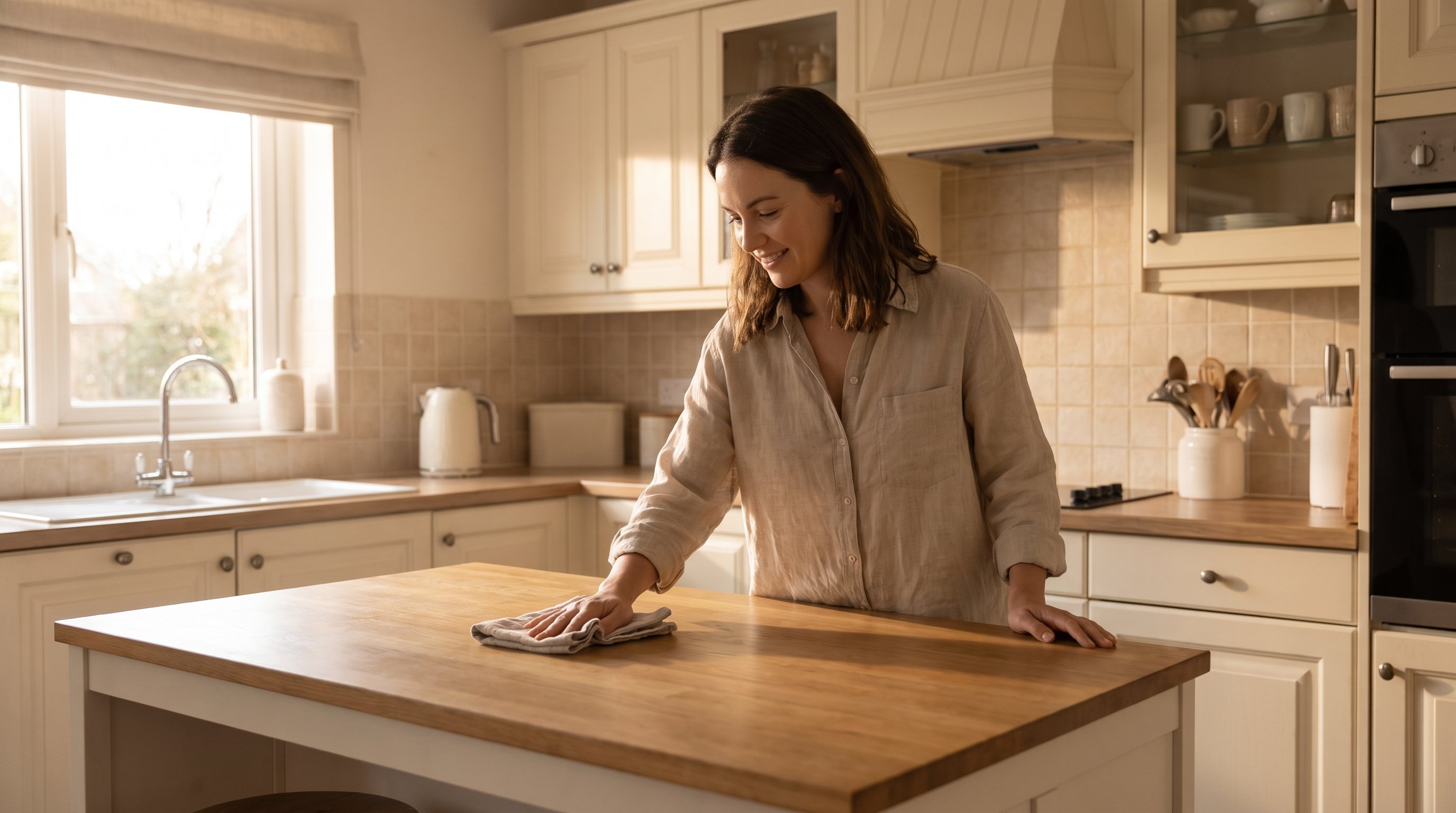
You don't get motivated to clean by waiting to feel like it. You get there by shrinking the task until starting costs almost nothing, then letting the momentum do the rest.
Motivation is a feeling, and feelings are unreliable fuel. A system of small, specific cues gets the job done on the days motivation never shows up.
This article covers why motivation to clean disappears so fast, what actually gets people moving, how to adapt the approach to your own week, and a tool worth knowing about if you want the structure built for you.
Why Motivation to Clean Runs Out so Fast
Motivation is a short-lived state, not a personality trait. It spikes when something feels urgent or rewarding and fades once the novelty wears off, which is exactly why a clean kitchen on Monday can feel impossible to recreate by Thursday.
Relying on it to clean means relying on a mood that was never built to last.
Here's the honest arithmetic: if cleaning only happens on the days you feel inspired, and inspiration shows up on maybe one or two days a week, the mess has five or six days to build up in between.
A smaller, repeatable action - ten minutes, one surface, one load of washing - doesn't depend on a mood spike. It just needs a trigger, which is a far easier thing to engineer than enthusiasm.
That's the mechanism worth building around: trade the big burst of motivation for a small action you can repeat on a bad day, not just a good one.
Waiting for the Urge Versus Scheduling the Task
Most people default to waiting for the urge to clean. The alternative is putting the task on a schedule and treating it like an appointment, not a feeling.
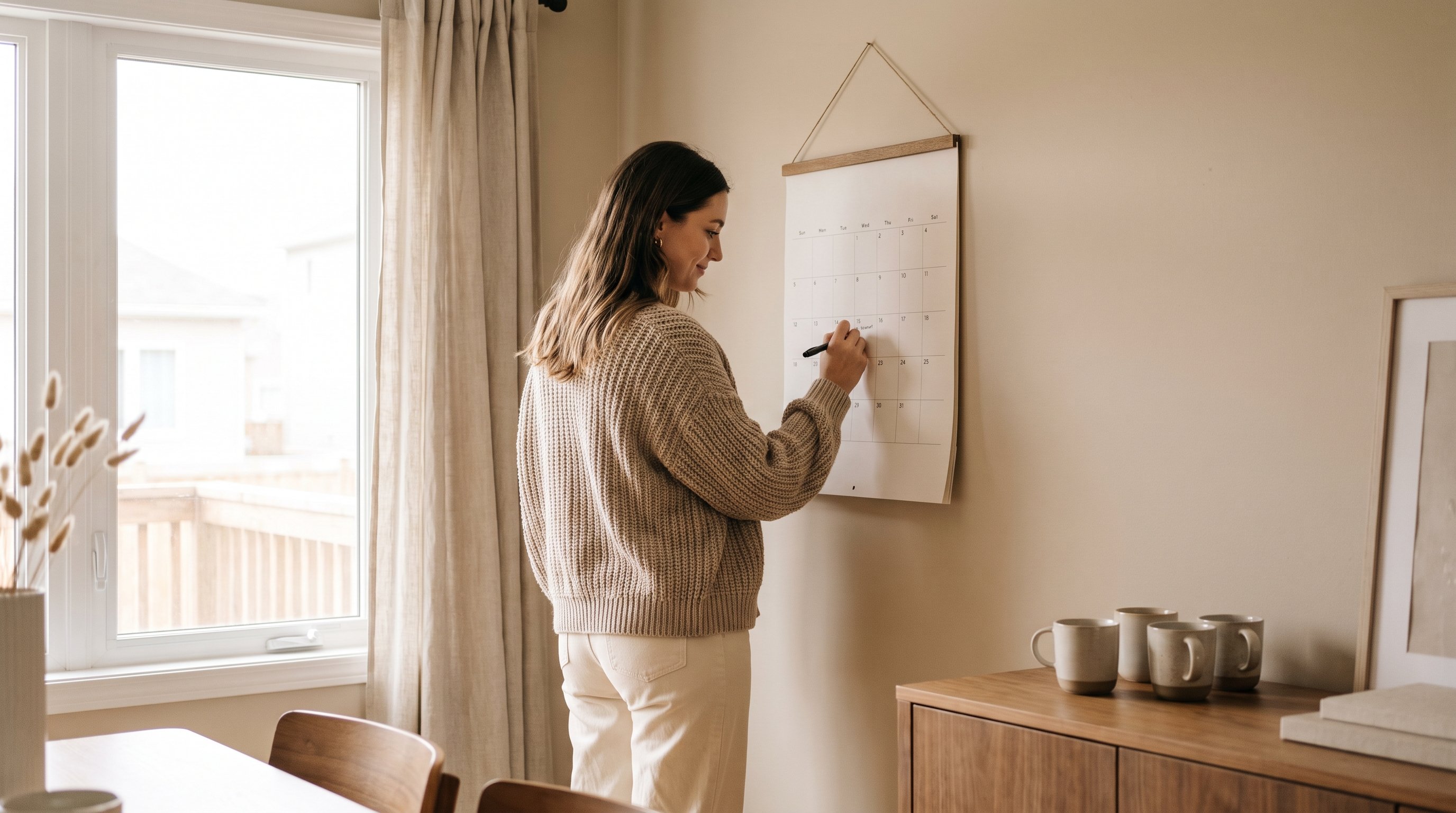
The schedule wins not because it feels better in the moment, but because it removes the need to feel anything at all before you start.
Why the Ten-Minute Tidy Beats the Deep Clean
A full deep clean of the house is the harder alternative: it takes hours, it demands energy you may not have, and it only happens when conditions line up perfectly.
A ten-minute tidy - clear the counter, deal with the sink, pick up what's on the floor - asks almost nothing of you, which means you can actually do it on a Tuesday night when you're tired.
Adherence is the whole game here. A ten-minute task done four times a week adds up to forty minutes of real cleaning.
A two-hour deep clean that only happens once a month, when the mood finally strikes, might add up to more total time, but the mess sits there for weeks in between, and the dread of starting grows the longer it waits.
The smaller version isn't a lesser version. It's the one that actually happens, which makes it the one that actually works.
Adapting This to Your Situation at Home
If You Live Alone and Keep Putting It Off
Pick one trigger, like finishing dinner, and attach a two-minute wipe-down to it before you sit down. No mess ever gets the chance to compound into a weekend project.
If You're Juggling Work and a Family
Split the house into zones and give each zone one day, so no single day demands more than ten or fifteen minutes. A shared family calendar spot works well as the trigger, since nobody has to remember on their own.
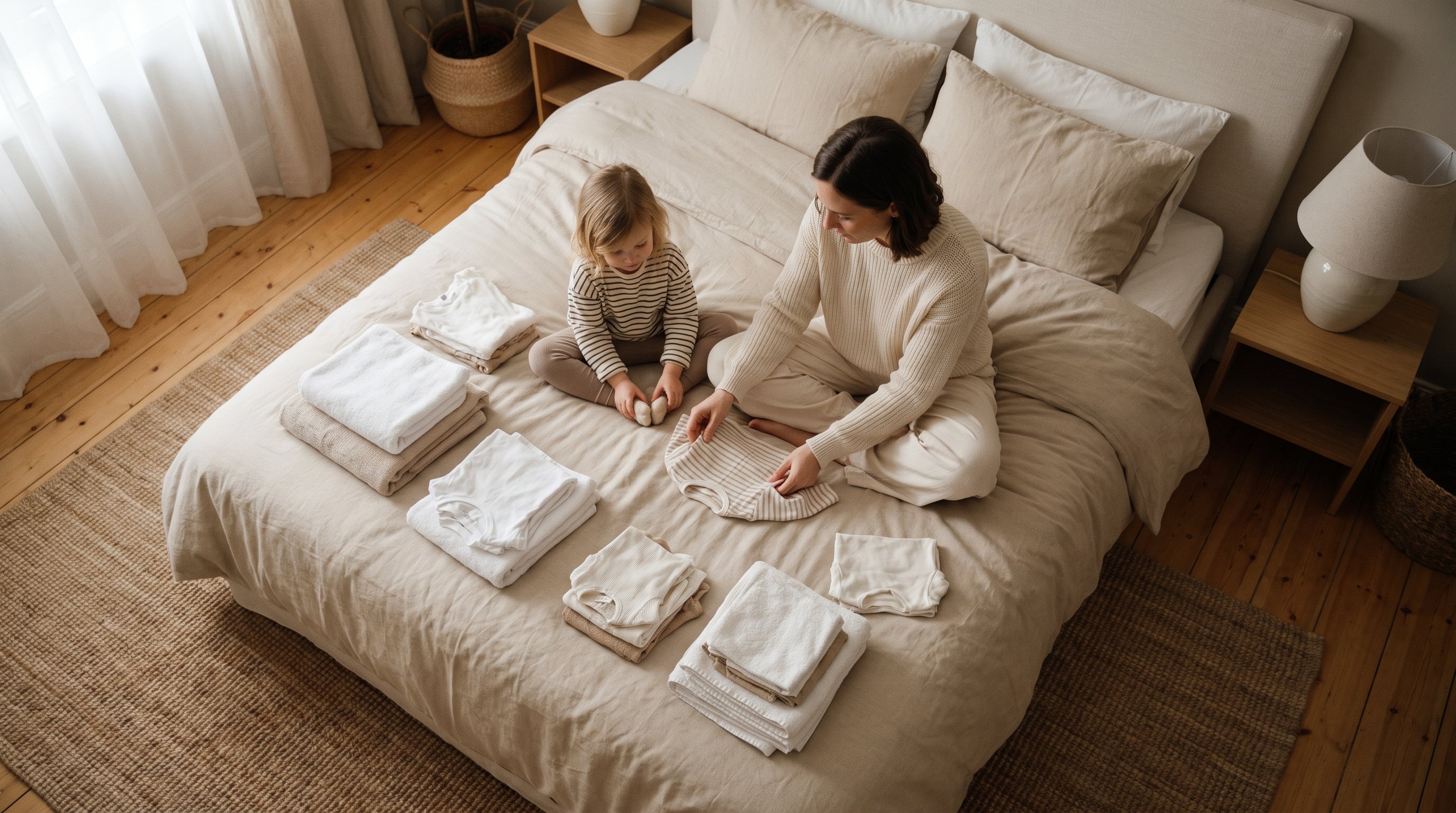
If You're Cleaning for the First Time in a While
Start with one room and one task, not the whole flat at once. A single finished room gives you proof the system works, and proof beats a pep talk every time.
If You Live With Others Who Don't Pitch In
Pick your own small, repeatable task and let it be visible, since a consistently clean corner tends to shift what others notice and do. You're not responsible for anyone else's motivation, only your own trigger.
Making Cleaning Stick Inside a Full Week
None of this works if the plan lives only in your head, because a vague intention to 'clean more' has nowhere to attach itself during a busy week.
It works better when the trigger, the task and the record of doing it sit somewhere you'll actually see them.
This is where Lasting Change fits in: the book builds a habit system around micro-actions tailored to your actual routine, and the companion app keeps a simple log so you can see the ten-minute tidy you did on Tuesday instead of relying on memory.
Seeing the pattern is often what keeps it going past the first week.
The Myth of Waking Up One Day Finally Motivated
Plenty of people wait for the day they'll just feel like cleaning, the way they imagine other people seem to.
That day isn't coming, not because something's wrong with you, but because that's not how motivation works for anyone.
It arrives after a bit of action, not before it, which is why the people who seem to clean effortlessly usually just have a small trigger they've repeated so often it no longer needs a feeling attached to it.
The real fix isn't finding the motivation. It's building the small, repeatable trigger that makes the motivation question irrelevant.
Building a Cleaning System With Lasting Change
A cleaning routine that depends on willpower will always be fragile, because willpower runs lowest exactly when the house needs attention most.
Lasting Change approaches this as a systems problem rather than a discipline problem, which is the more honest framing anyway.
The book is built from cover to cover around your own goals, with a dedicated section if tidiness or home routines are the growth area you're focused on, plus habit-stacking strategies that tie a quick clean to something you already do each day.
The app sits alongside it, tracking the small actions and giving you a milestone check-in so the habit has evidence behind it, not just intention.
Turning Today's Mess Into Tomorrow's Ten Minutes
Pick one trigger today - after dinner, before bed, the moment you walk in the door - and attach a task small enough that skipping it would feel odd, not relieving.
Lasting Change can hold that structure for you if building it alone feels like one more thing on the list, but the method works either way once the task is small and the trigger is fixed.